
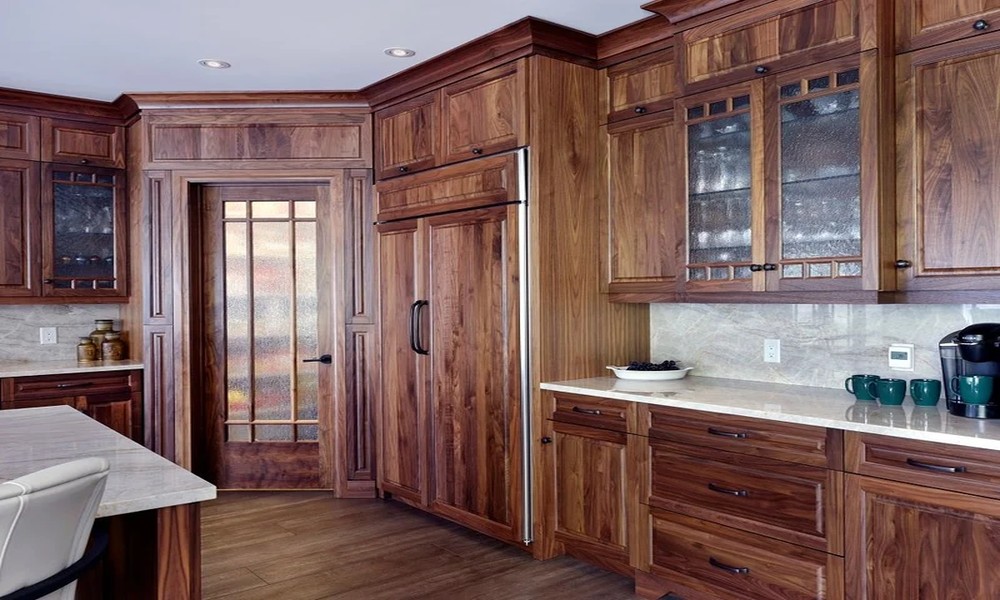
The kitchen reflects order and spatial clarity. Every element supports daily movement and comfort. The layout shapes how tasks flow. Good design improves both use and appearance. The modern kitchen demands careful planning. Now attention turns to refrigeration choices. Each option affects depth and alignment. These choices influence visual harmony and function.
Counter-Depth Design and Visual Balance
Counter-depth refrigerators align with standard counter edges. This design reduces outward extension into walking space. The front surface appears neat and structured. Cabinets and appliances share a consistent line. So, the kitchen feels open and balanced. These models still extend slightly past cabinetry frames. That detail creates a layered but controlled look. Storage capacity suits moderate household needs. Cooling systems remain efficient in most models. The style fits compact and modern spaces. The design supports a clean and simple layout. Movement becomes easier in narrow kitchen paths.
True Built-In Precision and Seamless Fit
True built-in refrigerators sit flush within cabinet structures. The installation requires precise measurement and expert planning. Panels align evenly without visible gaps. This design creates a continuous visual surface. Sometimes, higher cost reflects the custom installation process. Depth remains uniform across the entire wall. The appliance blends fully into the surrounding cabinetry. These systems often include advanced cooling features. Materials match the rest of the kitchen design. So, the result appears refined and cohesive. The structure supports long-term durability and performance. The kitchen gains a tailored and polished character.
Integrated Systems and Hidden Functionality
Integrated refrigerators hide completely behind cabinet panels. The appliance becomes invisible within the design scheme. The surface appears smooth and uninterrupted. Handles match cabinet finishes and shapes. The design resembles a continuous furniture wall. But installation demands careful craftsmanship and planning. Storage capacity depends on chosen configuration. Ventilation systems must support proper air flow. Visual noise is reduced across the entire kitchen. The result delivers a refined and quiet environment.
Depth, Proportion, and Movement Flow
Spatial geometry shapes how the kitchen functions. Depth affects reach and access to stored items. Shallow units improve ease of use. Deeper designs may require extra movement space. The arrangement influences walking paths and workflow. Now designers focus on ergonomic efficiency. Proper spacing prevents crowding and obstruction. Door clearance must match surrounding layout conditions. The balance between depth and movement remains essential. The kitchen becomes efficient and comfortable. Every dimension contributes to a smooth experience. The design supports both speed and ease.
Material Harmony and Design Intent
Material choice supports the overall kitchen composition. Surfaces should align with appliance finishes. Lighting enhances depth and spatial perception. Textures add warmth and visual contrast. The term built-in refrigerators represent a design philosophy. This approach values unity and intentional placement. So, every element connects within the space. Color selection influences visual depth and scale. Consistent materials strengthen design clarity. The kitchen expresses balance and thoughtful planning. Each detail supports a cohesive visual story.
Conclusion
The spatial geometry of the kitchen defines its success. Counter-depth models offer balance and efficient use. True built-in designs provide precision and elegance. Integrated systems create a hidden and seamless look. Each option serves a different design need. The choice depends on layout and lifestyle. A well-planned kitchen improves daily routines. The result is a space of comfort and clarity.