
Stove drip pans are the unsung heroes of your kitchen — silently catching grease splatters, boil-overs, and food debris every single day. But over time, that buildup turns into a stubborn, baked-on mess that looks unsightly and can even become a fire hazard. The good news? You don’t need harsh chemicals or hours of scrubbing to get them spotless again.
This guide covers everything you need to know to clean stove drip pans effectively — from quick daily maintenance to deep-cleaning methods that tackle even the worst grease.
What Are Stove Drip Pans?
Drip pans (also called burner pans or drip bowls) sit directly beneath the coil burners on electric stoves. They catch food spills before they reach the inside of the stove. Most are made from chrome-plated steel or porcelain-coated steel, and each material responds differently to cleaning methods.
Supplies You’ll Need
Before you start, gather these common household items:
| Supply | Purpose |
|---|---|
| Baking soda | Gentle abrasive, deodorizer |
| White vinegar | Cuts grease, dissolves mineral deposits |
| Dish soap | Breaks down oil and food residue |
| Ammonia | Heavy-duty degreaser (for tough stains) |
| Hydrogen peroxide | Brightens and disinfects |
| Non-scratch scrubbing pad | Scrubs without damaging finish |
| Plastic zip-lock bags | Used in the ammonia soaking method |
| Microfiber cloth | Drying and polishing |
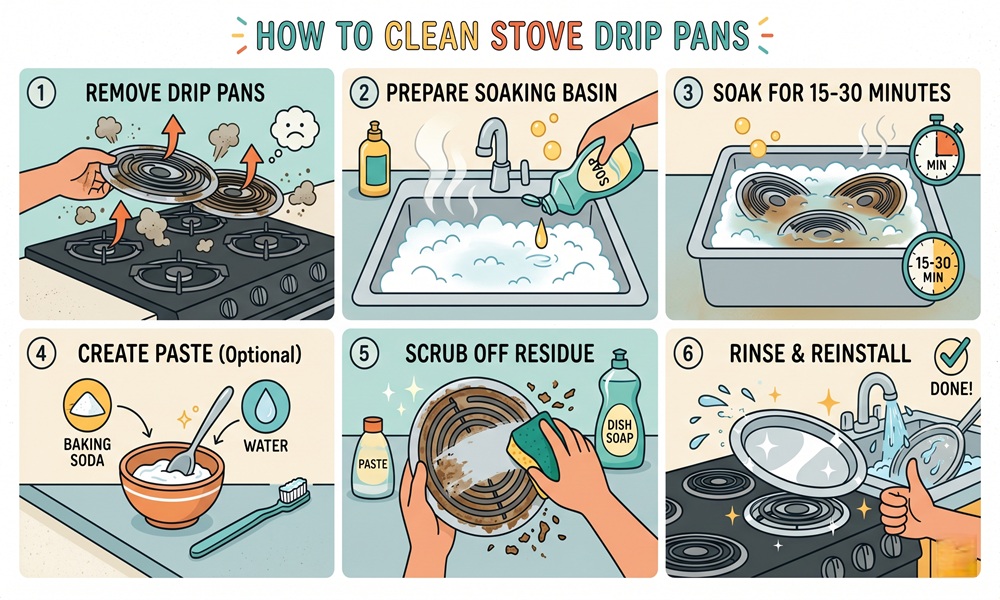
Method 1: Dish Soap & Hot Water (For Light Buildup)
Best for: Weekly maintenance or light grease
This is your go-to method if you clean drip pans regularly.
- Remove drip pans from the stove and let them cool completely.
- Fill your sink with hot water and add a generous squirt of dish soap.
- Submerge the pans and let them soak for 15–30 minutes.
- Scrub with a non-scratch pad in circular motions.
- Rinse thoroughly and dry with a microfiber cloth before replacing.
Pro Tip: Never place hot drip pans directly into cold water — thermal shock can warp chrome pans.
Method 2: Baking Soda & Vinegar (Best Natural Method)
Best for: Moderate grease and everyday grime
This is the most popular DIY method because it’s safe, chemical-free, and surprisingly effective.
Steps:
- Rinse drip pans under warm water to loosen surface debris.
- Sprinkle a thick layer of baking soda over the entire surface.
- Drizzle white vinegar over the baking soda — it will fizz immediately.
- Let the mixture sit for 15–20 minutes to break down grease.
- Scrub with a non-scratch pad, focusing on stained areas.
- Rinse well and dry completely.
Why It Works:
The fizzing reaction between baking soda (a base) and vinegar (an acid) creates carbonic acid, which loosens grime at a molecular level without scratching the surface.
Method 3: Ammonia Soaking (For Stubborn Baked-On Grease)
Best for: Heavy, baked-on grease and black carbon deposits
This method is highly effective but requires proper ventilation.
Steps:
- Place each drip pan in a separate zip-lock bag.
- Add ¼ cup of household ammonia to each bag — you don’t need to submerge; the fumes do the work.
- Seal the bags and leave them overnight (8–12 hours) in a well-ventilated area or outdoors.
- In the morning, open bags carefully (away from your face) and remove pans.
- Wipe away the loosened grime with a damp cloth or scrub pad.
- Wash with dish soap and water, then dry.
⚠️ Safety Warning: Never mix ammonia with bleach or any bleach-based cleaner — this creates toxic chloramine gas.
Method 4: Hydrogen Peroxide & Baking Soda
Best for: Discolored or stained chrome drip pans
This combination is excellent at restoring shine to dull or yellowed pans.
- Make a paste using baking soda + hydrogen peroxide (3% concentration).
- Apply the paste generously to the drip pans.
- Let it sit for 30 minutes.
- Scrub and rinse thoroughly.
- Buff dry with a microfiber cloth to restore shine.
Method Comparison at a Glance
| Method | Best For | Time Required | Effort Level |
|---|---|---|---|
| Dish soap & hot water | Light grease | 30–45 min | Low |
| Baking soda & vinegar | Moderate grime | 30 min | Low–Medium |
| Ammonia soaking | Heavy, baked-on grease | Overnight | Very Low |
| Hydrogen peroxide paste | Discoloration/stains | 45 min | Medium |
Chrome vs. Porcelain Drip Pans: What’s the Difference?
Not all drip pans should be cleaned the same way. Knowing your pan type protects them from damage.
| Feature | Chrome Pans | Porcelain Pans |
|---|---|---|
| Appearance | Shiny silver metallic | White or black matte finish |
| Durability | Prone to scratching | Chip-resistant but can crack |
| Best cleaner | Baking soda + vinegar | Dish soap or baking soda paste |
| Avoid | Steel wool, harsh abrasives | Vinegar (can dull finish over time) |
| Dishwasher safe? | Usually yes | Check manufacturer guidelines |
Can You Put Drip Pans in the Dishwasher?
It depends. Many chrome drip pans are dishwasher-safe, but frequent dishwasher use can dull their finish over time. Always check the manufacturer’s recommendation. Porcelain pans should generally be hand-washed to preserve their coating.
How Often Should You Clean Drip Pans?
| Frequency | Scenario |
|---|---|
| After every major spill | Wipe with damp cloth immediately |
| Weekly | Light soap and water cleaning |
| Monthly | Deep clean with baking soda or ammonia method |
| Every 1–2 years | Consider replacing if heavily pitted or damaged |
When to Replace Instead of Clean
Sometimes cleaning isn’t enough. Consider replacing your drip pans if:
- The chrome is peeling or heavily pitted
- There are cracks or chips in the porcelain coating
- The pan is warped and no longer sits flat
- Stains won’t come off despite multiple deep cleans
Replacement drip pans are inexpensive — typically $5–$15 per set — and can make your stove look brand new instantly.
Tips to Keep Drip Pans Cleaner Longer
- Wipe spills immediately while the stove is still warm (not hot).
- Use burner bibs — disposable foil liners that sit inside the drip pan for easy cleanup.
- Place a splatter screen over pots when frying or simmering.
- Lightly coat chrome pans with a thin film of cooking spray after cleaning to repel future grime.
Frequently Asked Questions
Can I use steel wool on drip pans?
Avoid steel wool on chrome or porcelain pans — it causes deep scratches and can strip the finish. Use a non-scratch scrubbing pad instead.
Why do my drip pans turn black?
Black discoloration is caused by carbonized grease — food residue that has been burned repeatedly. The ammonia soaking method works best for this type of stain.
Is it safe to clean drip pans in the dishwasher?
Generally yes for chrome pans, but check your stove’s manual. Avoid it for porcelain-coated pans.
What’s the fastest way to clean drip pans?
The ammonia bag method requires the least active effort — just seal and wait overnight for the fumes to do the heavy lifting.