
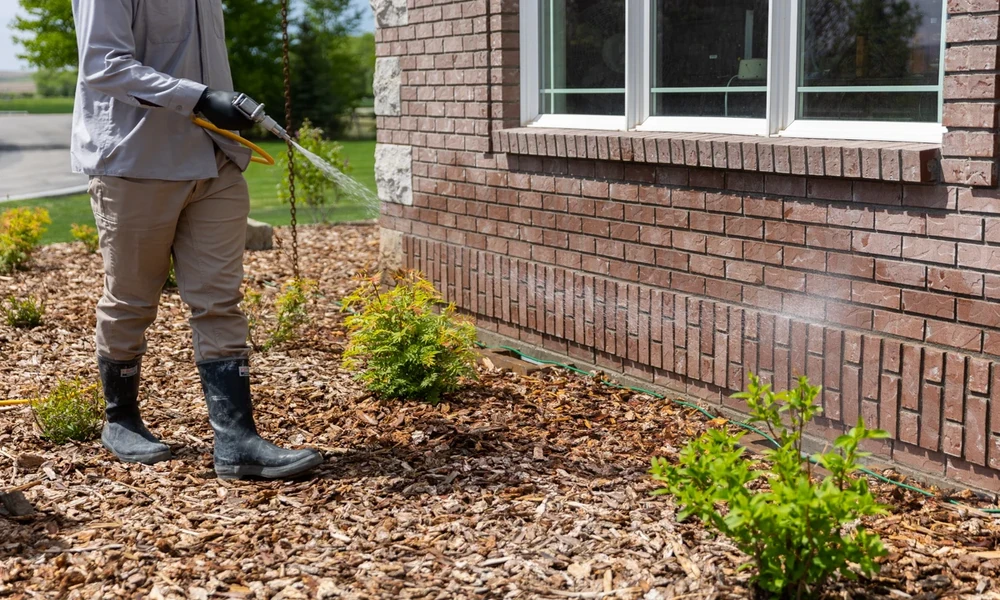
About 57 percent of Riverside homes are owner-occupied, and the median home value is near $585,000, according to the Census Bureau’s 2020 to 2024 American Community Survey estimates. A lot of Riverside homes share the same basic features, including stucco walls, concrete slab foundations, tile roofs, and irrigated yards. Every one of these opens an entry point or a shelter that pests use. Technicians at Akela Pest Control Riverside see the same weak spots on house after house, and nearly all trace back to soil contact, moisture, and small openings.
Concrete Slabs and Soil Contact Invite Subterranean Termites
Western subterranean termites live in the soil and need a constant supply of moisture. To reach the wood in a house, they build pencil-width mud tubes from the ground up across the foundation. Slab-on-grade construction gives them plenty of hidden routes through expansion joints and plumbing penetrations. Where stucco continues below the soil line, those tubes stay out of sight.
Drywood termites are a second threat. They infest dry wood above ground with no soil contact, which puts attic timbers, eaves, and window frames at risk. The University of California’s Statewide IPM Program calls mud tubes along a foundation wall the clearest sign of an active subterranean colony.
Watered Yards Keep Argentine Ants At the Walls
Riverside’s semi-arid climate leaves most landscaping dependent on regular irrigation. That water draws Argentine ants straight to the foundation. Researchers at UC San Diego demonstrated the link in a study published in the Journal of Animal Ecology. Plots given drip irrigation held 54 percent more ant nests after three months than dry control plots, and nest numbers dropped back to normal once the water was shut off. Food made far less difference than water in the same experiment. The ants also tend aphids on garden plants for honeydew, a second reason to stay in a watered yard. A sprinkler spraying the base of the wall, or a damp mulch bed against it, keeps the colony pressed to the house.
Tile Roofs And Open Vents Let Rodents into Attics
Roof rats are strong climbers, and a tile roof offers them footing and small voids beneath the tiles to nest in. Unscreened attic vents, breaks along the roofline, and the points where a pipe or wire passes through a wall are all wide enough to let one through. A mouse needs only a quarter-inch space and a rat about half an inch, so openings that look minor are still enough. Once inside, rodents gnaw at insulation and wiring. Branches that touch the roof give the animals a direct bridge from the yard.
Mulch And Shrubs Against the Wall Create Shelter
Dense shrubs, firewood stacked against the house, and thick mulch beds retain moisture and hide insects close to the structure. This band of greenery shelters spiders, cockroaches, and ants within inches of the wall. It blocks a clear view of the foundation during an inspection. Here is a list of features to check on a typical Riverside home:
- Keep at least six inches of clear foundation visible between the soil or mulch and any wood or stucco, so mud tubes and damage stay easy to spot.
- Aim irrigation heads away from the foundation, and repair leaks that keep the base of the house damp.
- Fit attic and foundation vents with intact metal screening that rodents cannot chew through.
- Seal the openings around pipes, cables, and gas lines with a rodent-proof material.
- Trim branches back from the roof, and pull shrubs a foot or more away from the walls.
Making Inspections Part of the Routine
These features stay much the same throughout the year, so they are easy to include in a regular home check. Walk around the house twice a year, once before summer ant activity picks up and again in early fall before rodents start seeking indoor shelter. Check for damp soil along the foundation, new mud tubes, damaged vent screens, and plants touching the walls. Fixing these issues can remove places pests use to enter or hide, giving treatment a better chance to hold.