
Don’t Get Left in the Cold: Fast Water Heater Replacement in Salt Lake CityWarning Signs You Need an S.O.S. 24/7 Water Heater Salt Lake Service
When your water heater begins to falter, it often provides subtle cues before a complete breakdown. Recognizing these warning signs early can help you prepare, but some indicators demand immediate attention, signaling that you need an emergency 24-hour water heater replacement service in Salt Lake City, UT. As of October 2026, the average lifespan of a conventional tank water heater is typically 10-15 years. If your unit is approaching or has exceeded this age, any of the following symptoms should be taken seriously.
Common signs that your water heater is struggling include:
- Little to No Hot Water: This is the most obvious sign. If your hot water supply is inconsistent, runs out quickly, or is non-existent, your heater is failing.
- Fluctuating Temperatures: Hot water that suddenly turns cold mid-shower indicates a problem with the heating elements or thermostat.
- Unusual Noises: Popping, rumbling, or banging sounds often come from sediment buildup at the bottom of the tank, which can reduce efficiency and lead to tank damage over time.
- Discolored or Rusty Water: If the hot water from your taps appears rusty or has a metallic odor, it often signifies corrosion inside the water heater tank.
- Leaks Around the Base: Any water pooling around the base of your unit is a critical red flag, suggesting a crack in the tank or a failing component.
- Rising Energy Bills: An unexpected spike in your utility bills without a change in usage could mean your inefficient water heater is working harder to heat water.
While some of these issues might initially seem like minor inconveniences, they can quickly escalate. We’ve found that understanding the distinction between symptoms that might allow for a scheduled repair and those that necessitate an immediate replacement is key.
Symptom Category Minor Repair Possible (Often Not Emergency) Immediate Replacement Trigger (Emergency) Hot Water Supply Occasional lukewarm water No hot water at all, or hot water runs out almost instantly Water Quality Slight discoloration, minor sediment Consistently rusty or metallic-smelling water Noises Faint popping or humming Loud banging, rumbling, or grinding sounds Leaks Minor drip from a pipe connection Water pooling around the base of the tank, visible tank cracks, significant leaks Unit Age Under 8 years old Over 10-15 years old, especially with other symptoms Other Indicators Inconsistent pilot light Gas smell, electrical issues, carbon monoxide detector activation Critical Failures Requiring S.O.S. 24/7 Water Heater Salt Lake Support
Some water heater failures don’t just signal inconvenience; they pose immediate safety risks and require urgent intervention. These critical situations are precisely why 24-hour water heater replacement services are indispensable:
- Tank Rupture or Catastrophic Flooding: A burst tank can release dozens of gallons of water in minutes, causing significant property damage. This is a clear-cut emergency demanding immediate replacement to mitigate further damage.
- Gas Smell: If you detect the distinct odor of natural gas near your water heater, it indicates a gas leak. This is extremely dangerous and requires immediate evacuation, contact with your gas provider, and then a 24/7 plumbing service to address the water heater.
- Electrical Shorting or Sparks: For electric water heaters, any signs of electrical malfunction, such as sparking, burning smells, or circuit breakers constantly tripping, point to a serious electrical hazard.
- Carbon Monoxide Risk: Gas water heaters produce carbon monoxide as a byproduct. If your carbon monoxide detector alarms, or you experience symptoms like dizziness or nausea, it could be due to a faulty water heater venting system. This is a life-threatening emergency.
In such scenarios, a rapid response is not just about comfort; it’s about safety and protecting your home from extensive damage. Delaying action in these critical situations can lead to escalating repair costs, health hazards, and prolonged disruption.
Immediate Safety Steps Before the Technician Arrives
When faced with a water heater emergency, taking immediate action can prevent further damage and ensure safety. Before our 24-hour technician arrives in Salt Lake City, we recommend the following steps:
- Shut Off the Water Supply: Locate the cold-water inlet valve at the top of your water heater and turn it clockwise until it’s completely off. This will stop water from flowing into a leaking tank.
- Turn Off the Power/Gas Supply:For Electric Water Heaters: Go to your home’s main electrical panel and switch off the circuit breaker labeled for the water heater.
- For Gas Water Heaters: Locate the gas shut-off valve on the gas supply line leading to the water heater (usually a small lever or knob) and turn it to the “OFF” position. If you smell gas, evacuate the premises immediately and call your gas company.
- Drain the Tank (if leaking): If the tank is actively leaking, connect a garden hose to the drain valve at the bottom of the water heater and direct the other end to a floor drain or outside. Open the drain valve and a hot water faucet in your home to help the water drain faster. Be cautious, as the water will be hot.
- Clear the Area: Remove any items stored around the water heater to provide clear access for the technician. This includes boxes, laundry baskets, or other obstructions.
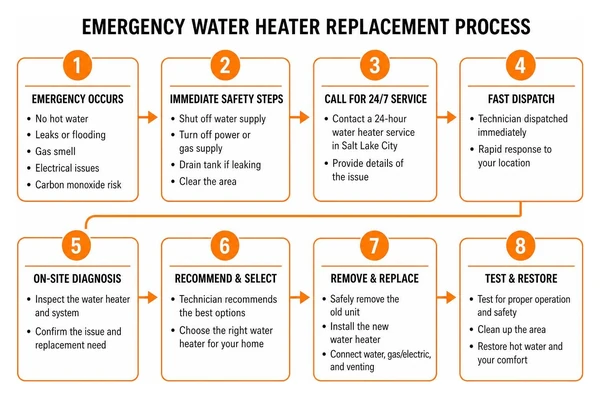
By following these steps, you not only ensure safety but also facilitate a smoother and quicker replacement process once our team arrives.
Navigating 24-Hour Emergency Replacement: Types, Timelines, and Upgrades
When an emergency strikes, the primary goal is to restore hot water quickly. However, a 24-hour water heater replacement in Salt Lake City also presents an opportunity to consider upgrading to a more efficient and reliable system. Modern technology offers several types of water heaters, each with distinct advantages.

The most common types of water heaters available for emergency replacement include:
- Conventional Storage Tank Water Heaters: These are the most traditional type, storing and heating a large volume of water in a tank. They are generally less expensive to purchase and install upfront.
- Tankless Water Heaters (On-Demand): These units heat water directly as it flows through, providing an endless supply of hot water without a storage tank. They are highly energy-efficient and take up less space.
- Heat Pump (Hybrid) Water Heaters: These systems extract heat from the air to heat the water, making them significantly more energy-efficient than conventional electric models. They typically require more space and specific installation conditions.
When considering an emergency replacement, understanding the differences between conventional tank and tankless systems is particularly relevant, as these are the most common options homeowners choose from quickly.
Feature Standard Storage Tank Water Heater Tankless Water Heater Lifespan 10-15 years (average) 20+ years Efficiency Lower (standby heat loss) High (heats on demand) Installation Time Typically 2-4 hours for replacement Can be longer for initial installation (venting, gas lines) Hot Water Supply Limited by tank size Endless Space Required Large footprint Compact, wall-mounted Energy Savings Minimal Significant Fuel Types Electric, Natural Gas, Propane Electric, Natural Gas, Propane One of the key benefits of choosing a 24-hour water heater replacement service in Salt Lake City is the rapid dispatch and efficient installation process. Companies offering emergency services are equipped to handle these situations, often completing replacements within the same day. This means minimizing downtime and quickly restoring your home’s comfort. Furthermore, reputable services often provide upfront pricing, ensuring you know the cost before any work begins, eliminating surprises during a stressful time.
Upgrading with S.O.S. 24/7 Water Heater Salt Lake Solutions
An emergency replacement doesn’t mean you have to settle for a like-for-like unit. It’s an excellent opportunity to upgrade to a more energy-efficient model, which can lead to significant long-term savings and enhanced comfort. As of October 2026, advancements in water heater technology offer compelling reasons to consider an upgrade:
- ENERGY STAR® Certified Units: These appliances meet strict energy efficiency guidelines set by the EPA. Replacing an old, inefficient unit with an ENERGY STAR® model can drastically reduce your energy consumption and utility bills.
- Hybrid Heat Pump Water Heaters: These units are particularly attractive for electric water heater replacements. They can use up to 60% less energy than standard electric models, offering substantial savings over their lifespan.
- Improved Reliability and Features: Newer models often come with advanced features like self-cleaning elements, digital controls, and smart home integration, providing greater control and peace of mind.
For homeowners in Utah looking for expert guidance on selecting and installing the most appropriate and efficient water heater during an emergency, a comprehensive resource like the S.O.S. 24/7 water heater Salt Lake guide offers invaluable insights into emergency water heater replacement options and best practices. Investing in a new, energy-efficient model not only solves your immediate crisis but also contributes to lower utility bills and greater long-term reliability for years to come.
Special Considerations for Historic and Older Salt Lake Homes
Salt Lake City boasts a rich architectural heritage, with many homes dating back decades or even a century. Replacing a water heater in an older or historic home can present unique challenges that require experienced technicians familiar with local building codes and older infrastructure.
- Venting Retrofits: Older gas water heaters may use different venting systems than modern, high-efficiency models. Upgrading might require modifications to existing flues or the installation of new PVC venting for condensing tankless units, which needs careful planning and execution to meet current safety standards.
- Galvanized Piping: Many older homes still have galvanized steel pipes, which can corrode internally and restrict water flow. During a water heater replacement, technicians might recommend replacing sections of galvanized piping with modern PEX or copper to ensure optimal performance and prevent future plumbing issues.
- Confined Utility Closets: Space constraints are common in older homes. Fitting a new, sometimes larger, or differently shaped water heater into a tight utility closet requires precise measurements and careful maneuvering. Tankless units, with their compact design, can be an excellent solution in such situations.
- Electrical Panel Capacity: Upgrading from a gas water heater to an electric model (especially a high-efficiency heat pump water heater) or installing an electric tankless unit might require an upgrade to your home’s electrical panel to accommodate the increased power demand.
- Seismic Strapping Compliance: Given Utah’s seismic activity, current building codes require water heaters to be properly strapped to prevent them from toppling during an earthquake. Older installations may not meet these standards, and a replacement provides an opportunity to ensure compliance and enhance safety.
Addressing these specific considerations ensures that the new water heater is installed safely, efficiently, and in compliance with all local regulations, providing reliable hot water for your historic Salt Lake City home.
What to Expect During the Emergency Replacement Process
When you call a 24-hour water heater replacement service in Salt Lake City, you’re not just getting a new appliance; you’re investing in a comprehensive service designed to restore your hot water quickly and efficiently. The typical process for an emergency water heater replacement involves several key steps:
- Initial Assessment and Diagnosis: Upon arrival, a licensed and experienced technician will first assess the situation. They’ll confirm the water heater’s failure, identify any contributing factors, and evaluate the extent of any damage (e.g., water leaks). This initial assessment helps determine the most suitable replacement options.
- Recommendation and Upfront Pricing: Based on the assessment, the technician will present you with options for replacement units, discussing the pros and cons of different types (tank, tankless, hybrid) and their energy efficiency. They will provide upfront pricing, ensuring you understand the total cost before any work begins, a standard practice for transparent emergency services.
- Safe Unit Extraction and Disposal: The old, failed water heater is carefully disconnected from its water, gas, or electrical lines. Any remaining water is drained, and the unit is safely removed from your home. Reputable companies will also handle the environmentally responsible disposal of your old appliance.
- Preparation and Installation of the New Unit: The installation area is prepared, which might involve minor adjustments to plumbing or electrical connections to accommodate the new unit. The new water heater is then carefully positioned, connected to the water supply, and hooked up to the appropriate power source (gas line or electrical wiring).
- Municipal Code Compliance and Safety Checks: Throughout the installation, the technician ensures that all work adheres to current Salt Lake City building codes and safety regulations. This includes proper venting, pressure relief valve installation, and seismic strapping. Once installed, the system undergoes rigorous testing to confirm proper operation, including checking for leaks, verifying heating functionality, and ensuring all safety features are active.
- Customer Walkthrough and Warranties: After the installation is complete and tested, the technician will walk you through the new system, explaining its operation, maintenance requirements, and answering any questions you may have. You’ll also receive information regarding the manufacturer’s warranty on the new unit and any labor warranties offered by the service provider, typically covering the installation work for a specific period.
This structured approach ensures that your emergency replacement is handled professionally, safely, and with minimal disruption to your home.
Frequently Asked Questions About Emergency Water Heater Replacement
When faced with a sudden water heater failure, many questions arise. Here, we address some of the most common concerns homeowners have about 24-hour water heater replacement services in Salt Lake City.
How fast can an emergency water heater replacement be finished?
One of the primary advantages of a 24-hour service is speed. Reputable companies offering emergency water heater replacement in Salt Lake City are equipped for rapid dispatch. Once a technician arrives at your home, the actual installation process for a standard tank water heater typically takes anywhere from 2 to 4 hours. This efficient turnaround means that in most cases, you can expect same-day service, with your hot water restored within hours of the technician’s arrival. For more complex installations, such as converting to a tankless system, the initial setup might take a bit longer, but the emergency response ensures the process begins immediately.
What factors impact the cost of a 24-hour water heater replacement?
While specific pricing cannot be discussed, several factors influence the overall cost of an emergency water heater replacement:
- Type of Water Heater: The choice between a conventional tank, tankless, or hybrid heat pump unit will significantly impact the cost, with tankless and hybrid models generally having a higher upfront investment due to their advanced technology and efficiency.
- Fuel Source: Whether your home uses natural gas, propane, or electricity can affect the unit cost and installation complexity.
- Unit Capacity/Size: Larger tanks or higher-capacity tankless units designed to serve bigger households or multiple hot water demands will typically cost more.
- Structural Modifications: If the new unit requires significant changes to existing plumbing, gas lines, electrical wiring, or venting, these modifications will add to the overall cost. This is especially true for upgrades like switching from a tank to a tankless system or in older homes requiring code updates.
- Permit Costs: Depending on local regulations in Salt Lake City, a plumbing permit may be required for water heater replacement, which is an additional cost.
- Emergency Service Fees: While emergency services offer invaluable peace of mind and rapid response, they often involve a premium compared to scheduled, non-urgent installations. However, the benefit of immediate hot water and preventing further damage often outweighs this.
Should an aging water heater be repaired or replaced during an emergency?
This is a critical question often debated during a water heater emergency. We generally advise considering replacement over repair if:
- Age: Your water heater is 10-15 years old or older. As units approach the end of their average lifespan, the frequency of breakdowns tends to increase, and investing in repairs becomes less cost-effective.
- Severity of Failure: Critical failures like a leaking tank, a gas leak, or significant electrical issues often necessitate replacement due to safety concerns and the high cost of repairing major components.
- Repair Cost vs. New Unit Cost: If the cost of the repair is more than 50% of the cost of a new water heater, replacement is usually the more financially sound decision in the long run.
- Energy Efficiency: Older units are significantly less energy-efficient than modern models. Even if a repair is possible, replacing an old unit with a new, energy-efficient one (e.g., ENERGY STAR® certified) can lead to substantial savings on utility bills over its lifespan, offsetting the replacement cost over time.
- Frequency of Breakdowns: If your water heater has required multiple repairs in the past few years, it’s a strong indicator that it’s nearing the end of its service life, and continued repairs will likely be a recurring expense.
The potential risks of delaying a water heater replacement, especially when critical failures are present, are significant. These include extensive water damage from a burst tank, the dangers of gas leaks or carbon monoxide poisoning, and the inconvenience of prolonged periods without hot water. While it might seem like a large upfront cost, a timely replacement often prevents more costly and dangerous problems down the line.
Conclusion
A sudden water heater failure can be a major disruption, especially in the chilly climate of Salt Lake City. However, with reliable 24-hour water heater replacement services available, you don’t have to endure cold showers or face the threat of water damage for long. By understanding the warning signs, knowing what to do in an emergency, and recognizing the benefits of professional, rapid replacement, homeowners can quickly mitigate immediate hazards and restore comfort to their homes.
Choosing a qualified installation ensures not only the immediate return of hot water but also the long-term reliability and efficiency of your new system. Whether you opt for a traditional tank or upgrade to a modern, energy-efficient tankless or hybrid model, a professional 24/7 service provides the expertise and speed necessary to navigate this unexpected challenge, ensuring you have consistent, reliable hot water access for years to come.