
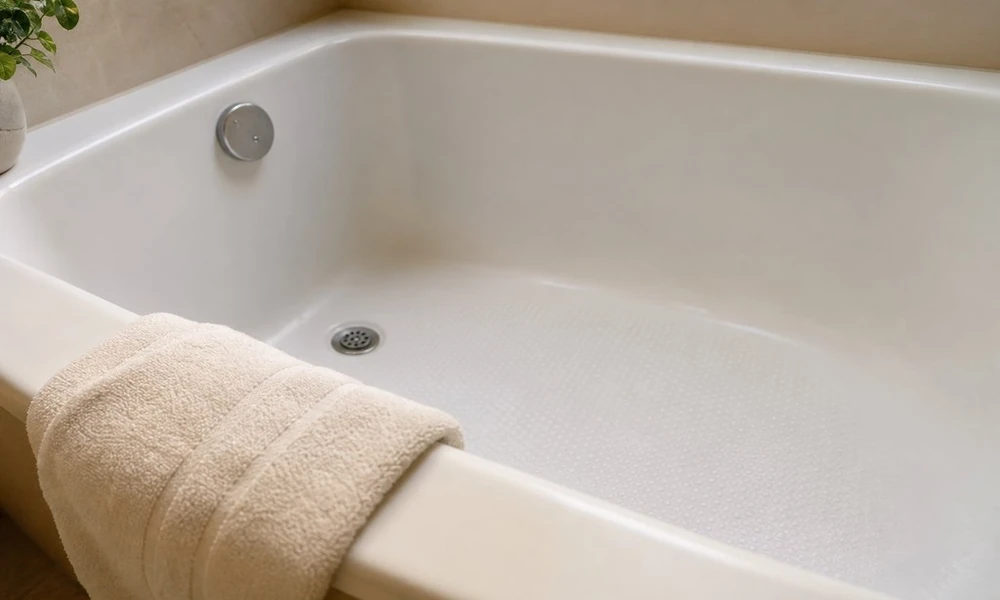
There are instances where a bathtub looks clean and properly cared for but doesn’t provide a secure footing. Water, soap scum, bath oils, and a shiny porcelain or acrylic tub can make the tub a hazard when a person is stepping in, standing up, or getting out. An anti-slip surface treatment is a great home improvement for those seeking additional traction in the bathtub without the cost of replacing the tub. It can be a good idea if the tub is still in good shape but feels overly slippery when you’re bathing in it.
Why Does the Tub Lose Its Grip?
Some bathtubs are designed with a glossy, non-porous finish that helps water bead off the tub and makes it easier to clean. While this type of finish may be easy to maintain, it can be hard to walk on when your bare feet touch the water. The problem may develop over time due to mineral deposits (Britannica covers this at www.britannica.com/science), soap scum, and wear to the finish of the tub. You don’t need visible damage in order for the tub to pose a slipping hazard. Situations that can cause the slipping issue to be more problematic include:
- A family member who is elderly or has limited mobility
- A young child who frequently uses the tub
- A showering setup with no separate shower stall
- Temporary bath mats that move around, roll, or trap moisture beneath them
- A tub that has been refinished but the walking surface remains very slippery
Anti-slip treatments do not turn the tub into an industrial-grade surface. Instead, the idea is to make the tub usable by adding grip while remaining able to easily clean the surface and maintain comfort for bare feet.

Traction treatments typically add a slight amount of texture or alter the finish in such a way that it is not as slippery when water is introduced. It is important to have a surface that provides adequate traction but isn’t abrasive to your skin. This will vary based on the type of tub material, the current state of the tub, and if the tub has been refinished previously. Different types of porcelain, fiberglass, acrylic, and coated tubs may require different preparation steps. In fact, sometimes a simple visual inspection won’t be enough to determine whether a treatment is suitable.
The finished result should be barely noticeable when dry. Its true value becomes evident once water is present.
You can consult a professional to see if the tub floor should be cleaned, repaired, refinished, or treated with a traction solution (Renew-It Refinishing is the page that matches this). Often, adding an anti-slip treatment is best done after any necessary repairs or refinishing work. Don’t apply an anti-slip treatment to an already peeled, cracked, or otherwise compromised surface.
Is a Traction Treatment Better Than a Bath Mat?
Bath mats are widely available, inexpensive, and removable. In certain homes, they may serve their purpose, but there are also some downsides. They may slip out from underfoot or collect debris. If you leave a bath mat in the tub after use, it can be harder to keep the surface clean. For homeowners looking to improve the entire tub surface rather than just adding a mat, an anti-slip treatment could be a worthwhile consideration. There is no daily hassle of putting the mat down and picking it up again. Plus, a mat-free bathtub can have a cleaner, more polished appearance.
Consider your reasons for wanting anti-slip treatment. Are you looking to address a rare incident of slipping, or would you prefer a more consistent level of safety for daily bathing?
An easily overlooked consideration is drainage. The traction treatment should not block the tub’s slope to the drain or leave puddles of water or cleaner residue. While evaluating the tub, check for dips in the floor, worn areas, and spots near the drain that take longer to dry than the rest of the tub. Such issues may need to be corrected prior to applying a traction finish.
It is also wise to consider the overall bathing environment. Although traction finishes add grip to the surface, they do not substitute for a well-anchored grab bar, sufficient light, or a stable method to step up and over the tub’s edge. For homes that may need to address a variety of safety concerns as a person’s abilities change, multiple issues may be addressed at the same time rather than focusing on one particular feature.
Additionally, you can customize the treatment to only certain areas of the tub, for example, the area below the showerhead where you stand. This helps keep the tub looking great and provides traction where it’s most needed.
What Do Prep and Upkeep Involve?

A good outcome from the project requires the proper preparation. Before applying an anti-slip treatment to the floor of the tub, you’ll want to ensure the area is free from soap film, oils, waxy cleansers, or other peeling coating. Failing to remove all of these materials can lead to an uneven application of the traction finish.
Ask a professional about the recommended curing time and care instructions for that specific type of surface. Some treatments require a full 24 hours before the tub can be used. If you use the tub too soon, the traction surface won’t have had time to set properly.
When maintaining the tub, don’t use abrasive cleaners or tools that may wear down the newly textured surface. Generally, mild cleaning solutions will be sufficient to remove dirt or residue without compromising the new finish. You can also prevent residue from collecting on the tub floor by rinsing away soap scum and excess body care products.
A more secure bathtub surface isn’t always the most dramatic bathroom project you can undertake. However, making your tub less hazardous can impact how you experience it each day. If the tub is in good condition, treating the floor of the tub may be preferable to replacing the entire unit. Before beginning the work, check the tub floor for flaking finish, cracks, built-up residue, and slick spots.