
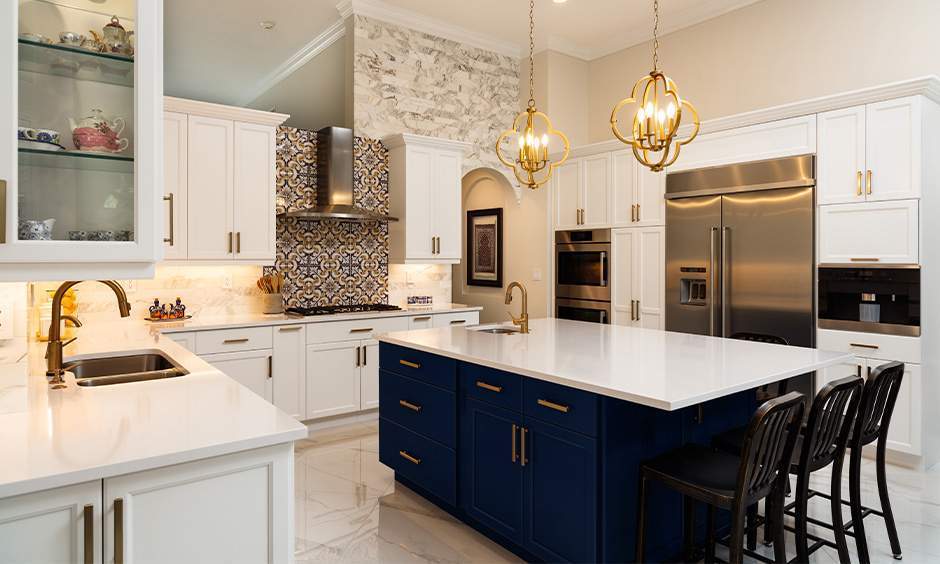
The kitchen has shifted from a purely functional room into the social heart of the home. Open plans, kitchen islands, and better lighting have turned cooking into something people do in front of guests. Modern kitchen design is defined by clean lines, flat-front cabinetry, integrated or panel-ready appliances, minimal hardware, and a deliberate material palette. The best modern kitchens feel edited rather than empty—every element is chosen, nothing is accidental.
Core Design Principles of a Modern Kitchen
- Minimalism with purpose: storage is hidden; countertops are clear. Every visible element is either beautiful, functional, or both.
- Integrated appliances: refrigerators, dishwashers, and sometimes even the range hood are concealed behind cabinetry panels for a seamless look.
- Consistent material palette: modern kitchens typically use two to three materials and stick to them – a countertop, a cabinet finish, and a backsplash. Adding more creates visual noise.
- Functional zones: a well-designed modern kitchen separates prep, cooking, cleaning, and storage zones so multiple people can use the space without collision.
Modern Kitchen Styles Compared
| Style | Key Characteristics | Typical Palette | Best Suited For |
|---|---|---|---|
| Contemporary | Sleek, current trends, high-gloss or matte finish | White, grey, black, bold accents | Urban apartments, new builds |
| Japandi | Japanese minimalism meets Scandinavian warmth, natural materials | Warm whites, timber, soft greens | Calm, low-clutter lifestyles |
| Industrial | Exposed brick or concrete, metal shelving, raw textures | Charcoal, steel, dark timber | Lofts, open-plan conversions |
| Scandinavian | Light-filled, functional, natural wood accents | White, light oak, pale blues | Family homes, practical spaces |
| Transitional Modern | Classic proportions with modern finishes, bridge of both worlds | Warm greys, cream, brushed brass | Those who want modern but not cold |
Cabinet Choices That Define the Aesthetic
Cabinetry covers more surface area than any other element in the kitchen. Get this right and everything else is easier.
- Flat-front (slab) doors: the defining look of modern design. No raised panels, no ornate profiles – just clean, uninterrupted surfaces.
- Handleless cabinets: push-to-open mechanisms or integrated finger pulls keep the face of the cabinet entirely clean.
- Two-tone cabinetry: upper cabinets in a lighter colour, lower in a deeper tone – adds visual depth without complicating the design.
- Fluted or reeded glass inserts: a texture trend adding character to an otherwise minimal face, good for upper cabinets where you want to break up solid doors.
Countertop Comparison
| Material | Look | Durability | Maintenance | Cost (per sq ft installed) |
|---|---|---|---|---|
| Quartz (engineered) | Consistent, can mimic stone | Excellent – non-porous | Very low – no sealing | $70 – $140 |
| Marble (natural) | Veined, luxurious, unique | Moderate – scratches, etches | High – must seal annually | $80 – $200+ |
| Granite (natural) | Varied, earthy stone look | Very good | Low – seal every 1-2 years | $60 – $150 |
| Concrete | Industrial, customisable | Good with proper sealing | Medium – can crack, stain | $65 – $135 |
| Porcelain slabs | Ultra-slim, large format | Excellent – very hard | Very low | $80 – $160 |
| Butcher block (wood) | Warm, natural | Moderate – avoid moisture | High – oil regularly | $40 – $100 |
Lighting: The Element Most Kitchens Get Wrong
A single overhead light is not a kitchen lighting plan. Modern kitchens layer three types of lighting:
- Task lighting: under-cabinet LED strips illuminate the countertop directly – essential for prep work and far more effective than overhead lights alone.
- Ambient lighting: recessed downlights or a central pendant provide general illumination without harsh shadows.
- Statement lighting: pendants over an island or a dramatic fixture above the sink add personality to an otherwise minimal space.
Colour Palettes Working Right Now
| Palette | Cabinet Colour | Countertop | Hardware Finish |
|---|---|---|---|
| Warm Minimal | Warm white or cream | Calacatta quartz | Brushed brass or gold |
| Moody Modern | Deep navy or forest green | White or light grey quartz | Matte black |
| Earthy Neutral | Greige or warm taupe | Honed travertine or concrete | Brushed nickel |
| Clean Contrast | Crisp white uppers, black lowers | Veined white quartz | Chrome or matte black |
| Natural Japandi | Timber veneer or linen | Light stone or pale quartz | Minimalist stainless or brass |
Layout Tips: Small vs. Large Kitchens
Modern design principles apply regardless of size, but the approach shifts:
- Small kitchens: go vertical with tall cabinetry to the ceiling, use light colours to expand the space visually, and skip an island if circulation becomes tight – a peninsula is more practical.
- Large kitchens: a working island with seating anchors the space and creates the social hub the room needs. Consider a contrasting finish on the island to give it visual weight.
- In both cases: consistent flooring that runs through into adjacent living spaces makes the kitchen feel larger and the overall floor plan feel more connected.
Final Design Checklist
- Decided on a maximum of three primary materials
- Cabinet doors are flat-front or shaker (avoid ornate profiles in a modern space)
- Under-cabinet task lighting is in the plan from the start – retrofitting is painful
- Appliances are integrated or consistently finished (all stainless or all panel-ready)
- There is a clear focal point – island, range hood, or backsplash – to anchor the design
- Flooring choice has been considered in relation to the adjacent rooms