
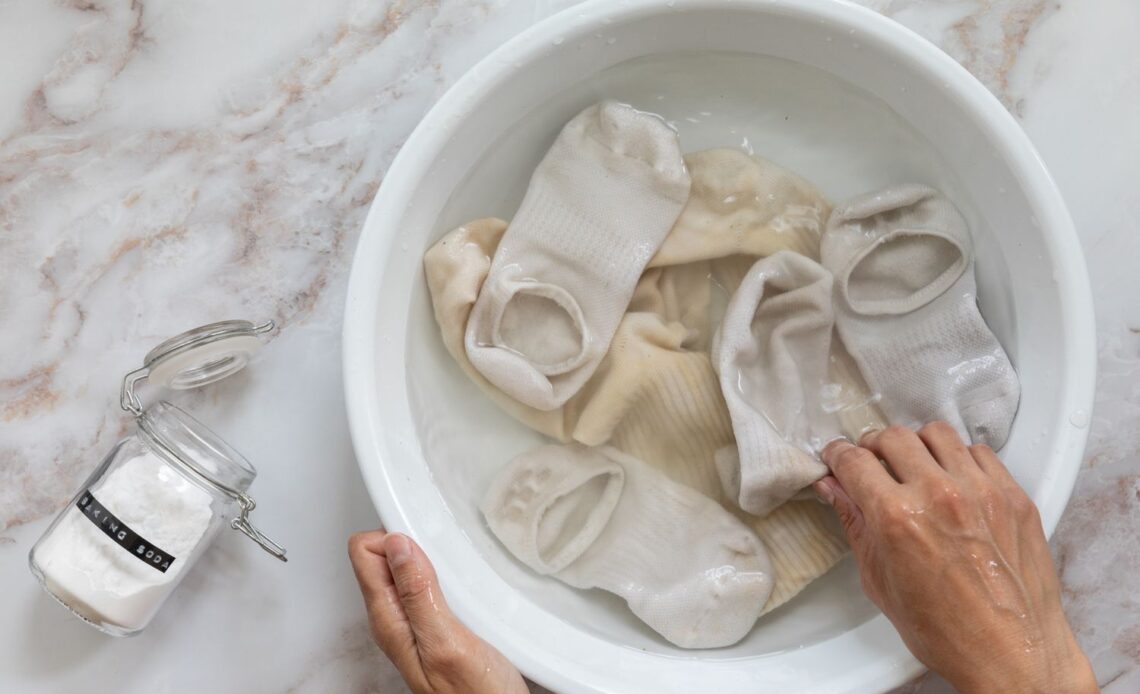
The three most effective methods for “how to whiten clothes without bleach“ are: a baking soda soak, a diluted hydrogen peroxide treatment, and a white vinegar rinse. These are safe for most fabrics, affordable, and surprisingly powerful on yellowed or dingy whites. For 2026, many eco-conscious households are also turning to “blueing agents” or simple lemon juice and sunlight for an old-school, chemical-free brightness boost.
Bleach works – but it’s harsh, can weaken fabric fibres over time, and is toxic if misused. For everyday whitening and maintenance, these natural alternatives do the job without the downsides.
Why Whites Go Yellow (and Why It Matters)
Yellowing usually comes from one of three things: body oils and sweat, mineral deposits from hard water, or – ironically – using too much detergent that doesn’t rinse out fully. Understanding the cause helps you pick the right treatment.
The Best Methods
Baking Soda Soak
Add half a cup of baking soda to a basin of warm water and soak the clothes for 1-2 hours before washing as normal. Baking soda is mildly alkaline, which helps break down acids from sweat and body oils. Works especially well on cotton t-shirts and bedsheets.
White Vinegar Rinse
Add one cup of white vinegar to the rinse cycle in place of fabric softener. Vinegar helps strip detergent residue and mineral deposits that dull whites. It also softens fabric naturally. Don’t worry about the smell – it completely disappears once the clothes dry.
Hydrogen Peroxide (Diluted)
Mix one part 3% hydrogen peroxide with three parts water, soak for 30-45 minutes, then wash. This is the closest natural equivalent to bleach in terms of whitening power. Safe for cotton, linen, and most synthetics – avoid on silk and wool.
Lemon Juice + Sunlight
Squeeze the juice of two lemons into a basin of warm water, soak for an hour, then lay the item flat in direct sunlight to dry. The combination of citric acid and UV light is a natural bleaching duo. Best for stubborn yellowing on cotton.
Method Comparison
| Method | Best For | Fabric Safe? | Cost | Effectiveness |
|---|---|---|---|---|
| Baking soda soak | General dulling, odour | Most fabrics | Very low | Good |
| White vinegar rinse | Detergent buildup, softening | All fabrics | Very low | Moderate |
| Hydrogen peroxide | Yellowing, stains | Cotton, linen, poly | Low | Very good |
| Lemon + sunlight | Stubborn yellowing | Cotton, linen | Very low | Good (slow) |
| OxiClean / oxygen bleach | Deep stains, heavy whitening | Most fabrics | Moderate | Excellent |
Keeping Whites White Long-Term
- Wash whites separately – always. Even light-coloured clothes can transfer dye
- Use the right amount of detergent – more isn’t better and causes residue buildup
- Wash on the correct temperature – warm (not hot) for most whites; hot only for heavily soiled items
- Skip fabric softener on whites – it coats fibres and traps grime over time
- Don’t let wet whites sit in the machine – take them out promptly to prevent mildew yellowing
What NOT to Do
- Don’t mix vinegar and baking soda in the same wash – they neutralise each other and you lose both benefits
- Don’t use hydrogen peroxide on silk, wool, or spandex – it can damage delicate fibres
- Don’t dry whites in direct sun for extended periods – UV eventually weakens fibres, especially synthetics
One thing most people overlook: check your water. Hard water is one of the biggest causes of whites looking grey or dull. If you’re in a hard water area, adding a water softener tablet to each wash can make a noticeable difference on its own.